R.01
Plaque inflammation
Agents that report macrophage activity and cathepsin protease activity, flagging plaques at higher risk.
Cardiovascular Research Center · Mass General
We build molecular imaging agents and intravascular catheters that reveal inflammation and thrombosis inside living arteries.
0+
Citations across the lab's published work
0
h-index
0
Papers cited 10+ times (i10-index)
0
Indexed works, including papers, abstracts and patents
Source: Google Scholar
Affiliations & partners
01 — Research
With molecular imaging chemists and engineers, we image the cells and enzymes that drive plaque rupture, clotting and vessel failure — and learn how these lesions form and resolve.
R.01
Agents that report macrophage activity and cathepsin protease activity, flagging plaques at higher risk.
R.02
Imaging fibrin, thrombin and activated factor XIII to watch clots form, mature and resolve in real time.
R.03
Targeting VCAM-1 to read the earliest inflammatory signals on the vessel wall, before plaques mature.
R.04
Understanding why dialysis access fails, by imaging inflammation and remodeling as fistulas form.
R.05
Intravascular NIRF catheters that pair molecular signal with structure in human-sized coronary arteries and stents.
R.06
Clinical research to raise success in chronic total occlusion PCI, radial access and microvascular angina.
02 — Bench to bedside
One continuous pipeline, from probe design through mouse models and large animals to the cardiac catheterization lab.
Chemistry
Build agents that light up a single biological target: a cell, an enzyme, a clot protein.
Murine models
Quantify targets with intravital microscopy, FMT, MRI and PET-CT as lesions evolve.
Large animals
Validate NIRF-OCT and NIRF-IVUS imaging in coronary-sized arteries and stents.
Clinic
Image human coronary arteries in the cath lab, aiming to catch high-risk disease earlier.
03 — Imaging platforms
Hover or tap a platform for what it lets us see.

Flagship · Intravascular
Near-infrared fluorescence fused with optical coherence tomography: molecular signal and microstructure captured together in one pullback.
Nature Medicine, 2011 ↗
Intravascular
Molecular fluorescence paired with ultrasound depth for full-wall coronary imaging.
EHJ Cardiovasc Imaging, 2017 ↗
Preclinical
Cell-level views of clots and plaques forming in living tissue.
Integrative Biology, 2013 ↗
Whole body
Quantitative 3D molecular imaging across the whole animal.
ATVB, 2009 ↗
Clinical
Opening complete coronary blockages, including CT overlay on live angiography.
Watch: MGH Advances video ↗04 — Highlights
2016 · First in human
The first in vivo human coronary imaging with a combined OCT and near-infrared autofluorescence catheter.
2011 · Nature Medicine
An intra-arterial catheter for simultaneous microstructural and molecular imaging in vivo — the foundation of NIRF-OCT.
Biology · Plaque progression
Serial NIRF-OCT and IVUS linked in vivo protease activity to how coronary-sized plaques progress.
Clinic · CTO PCI
CT imaging of the total occlusion overlaid on the live X-ray angiogram during the procedure.
05 — News & talks
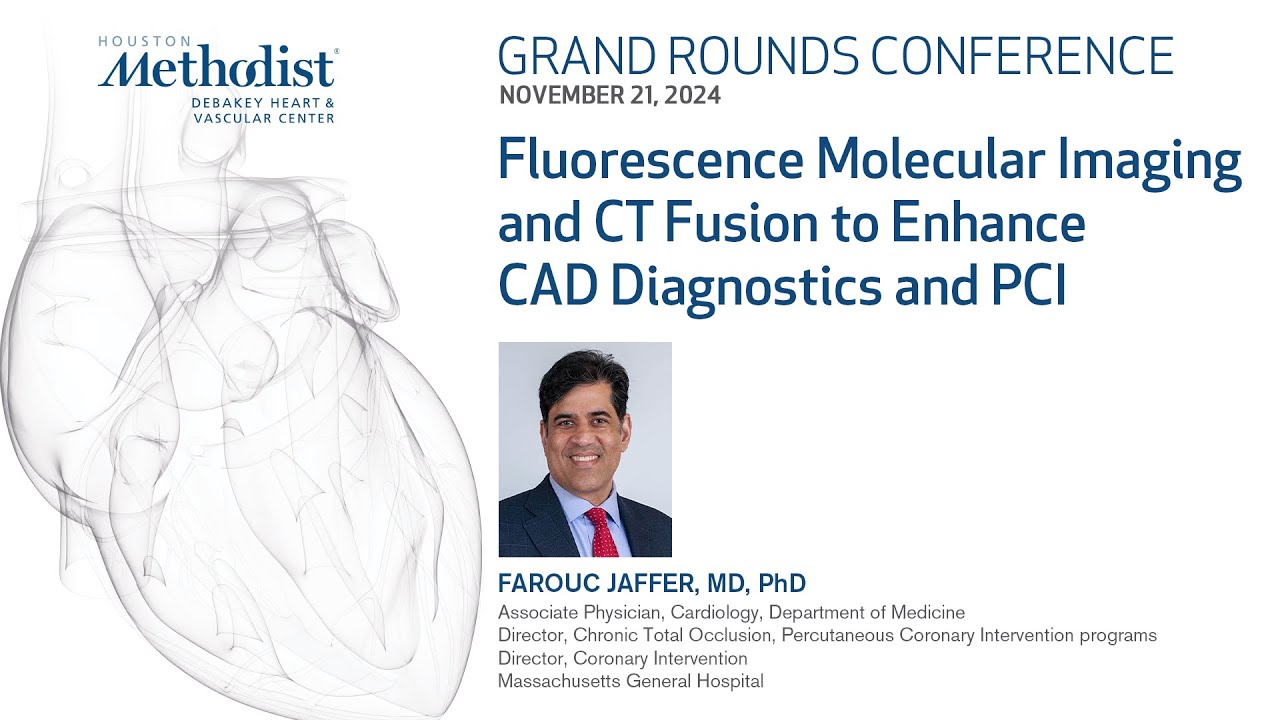
Talk · Houston Methodist DeBakey CV Education

Talk · CCC Symposium
Podcast · Sensei, episode 27

ACC 2018 · Radcliffe Cardiology
06 — People
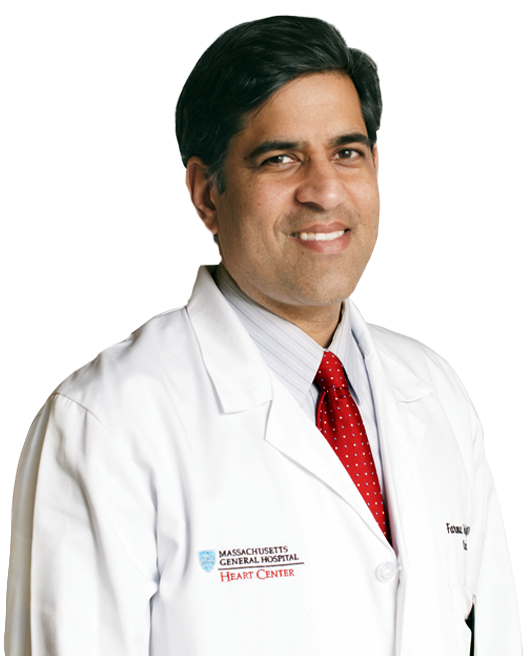
Principal Investigator
1990
BS with distinction, Mathematical & Computational Sciences — Stanford University
1993–1995
HHMI–NIH Research Scholar
1996
MD and PhD in Biophysics — University of Pennsylvania School of Medicine
1999–2001
Medicine residency, Brigham and Women's Hospital; cardiology fellowship, MGH
Postdoc
Center for Molecular Imaging Research, MGH; interventional cardiology fellowship
2003–2007
MGH Cardiology faculty · HMS Assistant Professor · CVRC Principal Investigator
2011–2013
Wellman Center affiliate · HMS Associate Professor · elected to the ASCI
The team
Instructor · 2021–present
Post-thrombotic syndrome and vein wall scarring, studied with intravital imaging.
Instructor · 2019–present
How therapeutics change inflammation in cardiovascular disease and arteriovenous fistula, read out by molecular imaging.
Lab manager · 2012–present
Runs lab operations and supports the preclinical imaging studies.
Postdoctoral fellow · 2025–present
Optical and acoustic imaging technologies for cardiovascular diagnosis and treatment.
Postdoctoral fellow · 2025–present
Therapeutic effects on cardiovascular inflammation, assessed by molecular imaging.
Postdoctoral fellow · 2024–present
How stress and depression affect thrombosis and the vein wall.
Postdoctoral fellow · 2024–present
Intravital and multiphoton imaging of vascular inflammation in atherosclerosis models.
Now recruiting
See how to apply
Alumni
Former fellows now run labs, imaging cores and cath labs across three continents.
07 — Publications
US 9,332,942 · 2016
Hybrid fluorescence and optical coherence tomography imaging
Jaffer FA, Ntziachristos V
US 12,514,450 · 2026
Intravascular dual-modality OCT and multichannel NIRF inflammation imaging
Thrapp AD, Ahsen OO, Tearney GJ, Jaffer FA, …
US 12,518,875 · 2026
Near-infrared autofluorescence imaging systems and methods
Jaffer FA, Tearney G, Gardecki J, …
US 8,864,821 · 2014
Methods and compositions for identifying subjects at risk of developing stent thrombosis
Jaffer F, Rajopadhye M
More: Google Scholar · PubMed · First-in-human NIRAF-OCT (2016) · Intravascular NIRF review (2020)
08 — Work with us
We train at the interface of cardiology, chemistry, optics and engineering.
Track A
Undergraduate, graduate and medical students seeking hands-on imaging research.
Track B
PhDs and MDs ready to lead translational molecular imaging projects.
Track C
Chemists, engineers and companies advancing vascular imaging.
09 — FAQ
A catheter inside the artery detects near-infrared light from targeted imaging agents or natural autofluorescence. Combined with OCT or IVUS, it shows both what a plaque looks like and what it is doing biologically.
Heart attacks, strokes and venous clots are driven by biology that structural imaging alone can miss. Seeing macrophages, proteases and fibrin directly could help identify high-risk plaques and stents earlier.
Send your CV, a short statement of research interests and two references through the contact form below or by email. Please mention which track you are applying for.
For clinical care, including chronic total occlusion PCI, please call the clinical office at 617-724-8052. The research lab cannot give medical advice.
Yes. Our catheters and systems were developed with engineering and chemistry partners. Reach out through the research office to discuss agents, devices or studies.
10 — Contact
Trainees, collaborators and partners: tell us who you are and what you'd like to explore.
Or write directly to fjaffer@mgh.harvard.edu · Research office 617-724-9353 · Patients: 617-724-8052